




_lowres.jpg)
_lowres.jpg)
_lowres.jpg)
Plant of the Month
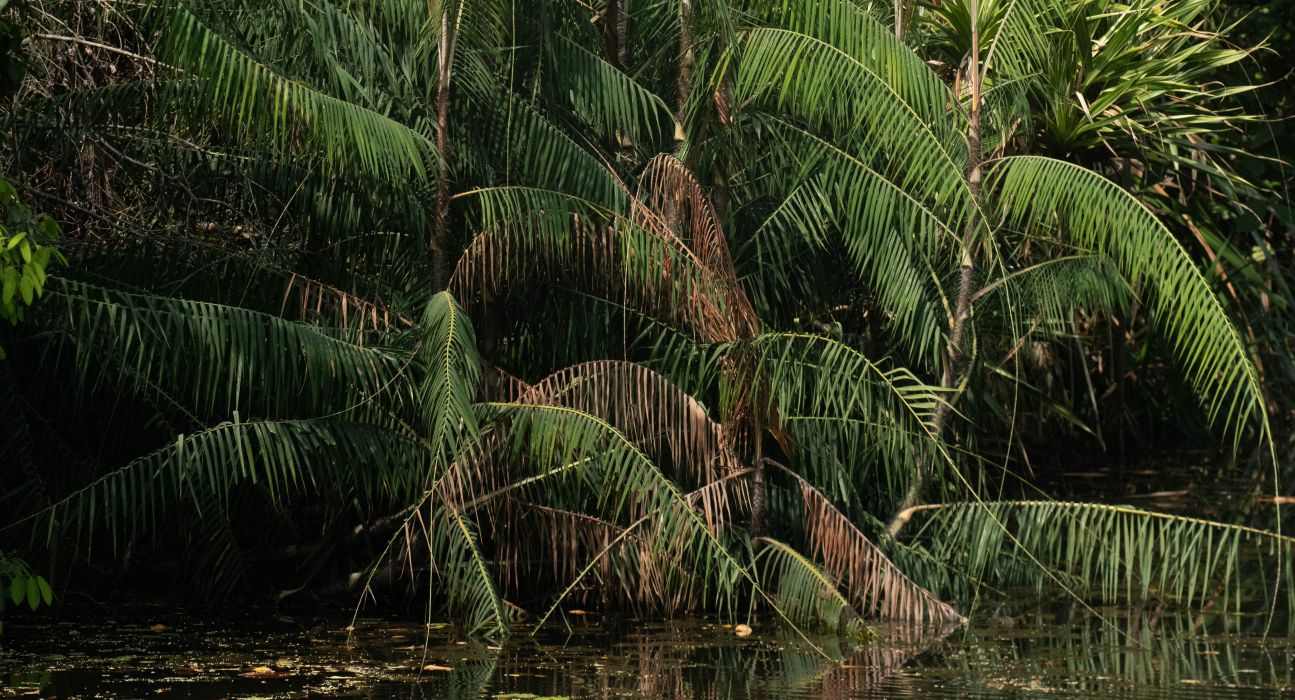
Calamus erinaceus
Calamus erinaceus, commonly known as Rotan Bakau, is a native clustering rattan palm, capable of climbing to heights of 15 metres or more. It is the only mangrove rattan species in Singapore and can be found naturally on the landward side of mangroves or behind coastal sandbars. In Peninsular Malaysia, wild elephants are known to feed on the young stems and shoots, expertly avoiding the spiny fronds.
Animal of the Month
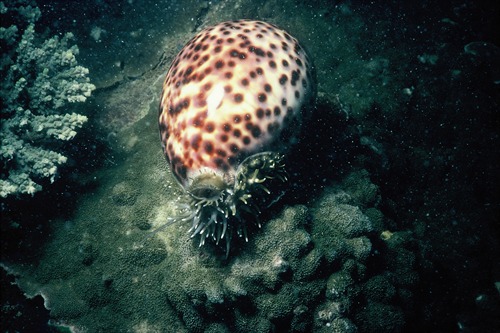
Cypraea tigris
Cypraea tigris, commonly known as the Tiger Cowrie, is a large sea snail found on the ocean floor in the Indo-Pacific region. Once common, it is now much less abundant due to shell collecting and habitat destruction. In Singapore, it is exceedingly rare.
Hopea odorata and Hopea sangal
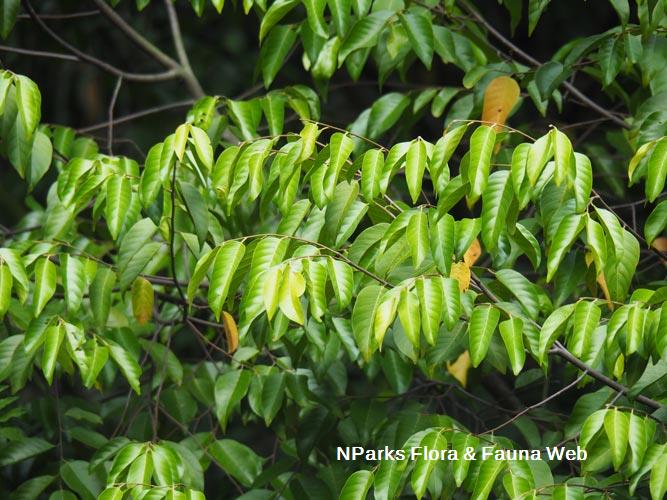
Did you know that Hopea odorata and Hopea sangal can be distinguished by differences in their leaves, leaf stalks, young twigs, domatia and flowers? Pick up quick tips from our botanists with this easy-peasy comparison guide!
Hopea odorata and Hopea sangal.jpg)
Cashew Apple
The Cashew Nut tree (Anacardium occidentale) is popular for its roasted seed. However, its young leaves and fleshy fruit also known as the 'apple' are also edible! The fresh cashew 'apple' is juicy and said to have sweet with a slight astringency. The young leaves are pale green to reddish in colour and are eaten in rural communities in Malaysia and Indonesia. The leaves are blanched and served as ulam with sambal belacan, or added to nasi kerabu adding a sour and subtly astringent flavour to dishes. Delicious!
LEARN MORE
Finger-licking Citrus peels
Besides its unusual appearance, did you know the fruit of Citrus medica or Fingered Citron makes excellent zest? The Fingered Citron has extremely thick peels that makes up most of the fruit. Its rind is rough and has a bumpy texture, but is fragrant and lacks the bitterness commonly found in lemon and orange peels. This citrus fruit is a great alternative in recipes calling for lemon or orange zest. The zest can also be diced and cooked in sugar water to make candied fruit, perfect for snacking!
Finger-licking Citrus peels
Fireworks!
Russelia equisetiformis, also known as Firecracker Plant, is a bushy shrub which as branches that start out erect, and bend over as they grew longer bearing tubular, firecracker-like flowers. This plant blooms frequently throughout the year, and best grown in full sun and well-drained moist soil. The flowers attracts biodiversity, especially sunbirds, and are available in a variety of colours - ranging from red, yellow to salmon. Firecracker Plant adds texture to a garden as it drapes over walls and rocks, creating a fountain effect.
2406
Flora and Fauna Tributes to Singapore
A total of 2053 vascular plant species have been recorded to be native to Singapore (Singapore Red Data Book, 2008). Of these at least 20 species have scientific names derived from "Singapore", their scientific names containing "singaporeana", "singaporeanum", "singaporensis", "singaporense", "singapurensis" and "singapureana". There are also others with common names that pay tribute to the country in which they are or were naturally found, such as the Singapore Rhododendron (Melastoma malabathricum). The animals are not to be missed either, with native fauna named after our island state, such as the Singapore Freshwater Crab (Johora singaporensis) and the Daisy Sponge (Coelocarteria singaporensis). As a novel way of celebrating National Day, read more about some of these Singaporean plants and animals on Flora&FaunaWeb by searching for their names.
Flora and Fauna Tributes to Singapore
Fragrant, sweet and everything nice
Did you know that besides the leaves, the seeds of the Basil or Ocimum basilicum are also edible! Basil seeds contain little carbohydrates but are rich in protein and omega-3 fatty acids. When soaked in water, the seeds exude a gelatinous mass on the outside yet remain crunchy. Basil seeds can be added to beverages, desserts and confectioneries to add texture to refreshments.
Fragrant, sweet and everything nice
Sunda Slow Loris
Video of wild Sunda Slow Loris in Singapore, captured on Night Vision Equipment.
Flora & Fauna News
View All
Biodiversity in Pulau Ubin
24 September 2026
Biodiversity in Pulau Ubin
24 September 2026
Once shaped by the bustle of farms, fishponds, and granite quarries, Pulau Ubin has quietly transformed into one of Singapore's most remarkable natural refuges. Over the past five decades, secondary forests and mangroves have reclaimed the land, with satellite imagery showing more green cover today than in the 1950s. A recent update to the island's biodiversity inventories now provides benchmark references across 13 flora and fauna groups, offering a richer understanding of Pulau Ubin's natural heritage and its potential role as an ecological stepping stone for wildlife dispersal to the main island of Singapore.

A new night-blooming species of Hoya (Apocynaceae: Asclepiadoideae) from Borneo
11 August 2026
A new night-blooming species of Hoya (Apocynaceae: Asclepiadoideae) from Borneo
11 August 2026
Researchers from the Singapore Botanic Gardens and Bogor Botanic Gardens have discovered a new species of night-blooming Hoya. Hoya biruensis, has a shrubby to epiphytic habit with pendulous stems. Its pinkish-cream, round-shaped, single flowers open after sunset, partly close the next day, re-open the second night and wither the following morning. This species is only known to occur in the primary heath forest of Bukit Biru in West Kalimantan, Indonesia.

Additions to the Flora of Singapore
27 July 2026
Additions to the Flora of Singapore
27 July 2026
Since 2025, 3 plant species are now recognised by researchers to have become naturalised in Singapore: Boat Lily (Tradescantia spathacea), Limeberry (Triphasia trifolia) and West Indian Nettle (Laportea aestuans). Another 2 species are discovered to be casual, meaning they occur in the wild but have not yet formed self-sustaining populations: Fire Bush (Hamelia patens) and Rose Cactus (Leuenbergeria bleo). All of them except West Indian Nettle are widely grown in Singapore for their ornamental foliage, flowers and fruits. Monitoring the populations of these species in the wild for ecological balance with Singapore’s native flora is important.

A new species of Homalomena from Indonesian New Guinea
07 July 2026
A new species of Homalomena from Indonesian New Guinea
07 July 2026
A new aroid species discovered in Central Papua, Indonesia, was formally named Homalomena polyneura. The specific epithet polyneura is derived from the Greek poly- (many) and neuron (nerve, vein), in reference to the conspicuous raised veins on the upper leaf surface. This water-loving plant is about 10–17 cm in height, with attractive, narrow, elongated to oblong leaves bearing 5–9 prominent veins on each side. The species has long been in commercial trade under the horticultural name Homalomena ‘Samurai’ and was formally described as a distinct species in 2025.